 What was the main reason, moment that you decided to write such detailed book on post-punk? Is it because you somehow grew-up with that music (the music we listen as teenagers we normally consider as the most exciting)? Has it something to do with the sudden revival of post-punk few years ago or is it pure coincidence?
I think it's one of the most exciting, creative, radical and turbulent eras of music in all of rock history and the history of youth culture. I would believe that even if I hadn't lived through it as a teenager and student in my early twenties (when people are generally more impressionable and have this kind of biological, hormonally driven energy that makes them excitable). But I did live through the period, and came of age as a listener then, so have a special investment emotionally in that time.
I actually started getting interested again in that period at the very end of the Nineties for a whole bunch of reasons--getting to a certain age (in 1999 I would have been 36) and starting to look back and assess the journey through music I'd taken, but also because of a fading belief in rave culture, which had been what had carried through the entire Nineties. I'd had a kind of "second adolescence", experiencing the same kind of wild excitement about dance culture and electronic music that I'd felt about postpunk, and for similar reasons: the incredible speed with which music was mutating, the futurism and disorientating strangeness of the sounds, the anarchic cultural politics of the rave scene. When that faded it got me thinking hard about music and the kind of investment of belief I made in it, which I could trace back ultimately to the years 1978-79.
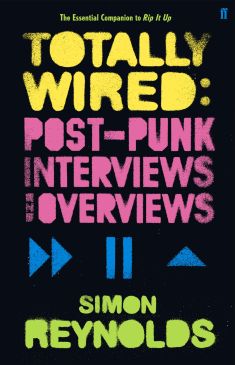
Around that time--and possibly for the same reasons--you could see the very first stirrings of interest in postpunk. Andrew Weatherall, for instance, a famous techno DJ who had a history before that of being into punk music and postpunk and industrial music, put out a compilation called 9 O'Clock Drop, which was full of the kind of postpunk dance music that would have been played in the mid-Eighties at the Hacienda, the club in Manchester that New Order and Factory Records started, and that later would be one of the birthplaces of rave in the UK. Weatherall is about the same age as me. But also younger musicians were rediscovering the postpunk era. You had groups like The Rapture and Erase Errata. But it really got going full strength as a revival about 2003, by which time I was already hard at work on the book. So it wasn't really an influence on me wanting to do the book, but I was aware all this was going on, and that the book was timely. I was worried the postpunk revival would peter out before the book actually came out, but no, it carried on, and even now you are still getting groups coming through who are influenced by postpunk. There's still a steady stream of reissues from that era. It's great for me because I have another postpunk book out, a spin off of Rip It Up called Totally Wired: Postpunk Interviews and Overviews.
What was the main reason, moment that you decided to write such detailed book on post-punk? Is it because you somehow grew-up with that music (the music we listen as teenagers we normally consider as the most exciting)? Has it something to do with the sudden revival of post-punk few years ago or is it pure coincidence?
I think it's one of the most exciting, creative, radical and turbulent eras of music in all of rock history and the history of youth culture. I would believe that even if I hadn't lived through it as a teenager and student in my early twenties (when people are generally more impressionable and have this kind of biological, hormonally driven energy that makes them excitable). But I did live through the period, and came of age as a listener then, so have a special investment emotionally in that time.
I actually started getting interested again in that period at the very end of the Nineties for a whole bunch of reasons--getting to a certain age (in 1999 I would have been 36) and starting to look back and assess the journey through music I'd taken, but also because of a fading belief in rave culture, which had been what had carried through the entire Nineties. I'd had a kind of "second adolescence", experiencing the same kind of wild excitement about dance culture and electronic music that I'd felt about postpunk, and for similar reasons: the incredible speed with which music was mutating, the futurism and disorientating strangeness of the sounds, the anarchic cultural politics of the rave scene. When that faded it got me thinking hard about music and the kind of investment of belief I made in it, which I could trace back ultimately to the years 1978-79.
Around that time--and possibly for the same reasons--you could see the very first stirrings of interest in postpunk. Andrew Weatherall, for instance, a famous techno DJ who had a history before that of being into punk music and postpunk and industrial music, put out a compilation called 9 O'Clock Drop, which was full of the kind of postpunk dance music that would have been played in the mid-Eighties at the Hacienda, the club in Manchester that New Order and Factory Records started, and that later would be one of the birthplaces of rave in the UK. Weatherall is about the same age as me. But also younger musicians were rediscovering the postpunk era. You had groups like The Rapture and Erase Errata. But it really got going full strength as a revival about 2003, by which time I was already hard at work on the book. So it wasn't really an influence on me wanting to do the book, but I was aware all this was going on, and that the book was timely. I was worried the postpunk revival would peter out before the book actually came out, but no, it carried on, and even now you are still getting groups coming through who are influenced by postpunk. There's still a steady stream of reissues from that era. It's great for me because I have another postpunk book out, a spin off of Rip It Up called Totally Wired: Postpunk Interviews and Overviews.
 Many new bands that are inspired with the original post-punk appeared recently, but after all it's clear that copy is always just a copy, no matter how good is it. Is it possible at all, that something like post-punk will re-appear with such strong impact and identity? Isn't the whole situation in society and music scene now in a way similar to the situation in the mid-70s?
No, it's quite impossible, as you say, for postpunk to regenerate, the entire political and social context is different, as is the musical context, in part because postpunk happened in the first place, leading to things like the independent label scene. Groups who try to imitate postpunk bands are missing the point, they are betraying the spirit of postpunk right there because postpunk was not about harking back to the past. That said, I think you can see various things that, while not directly influenced by postpunk, have a similar methodology and sensibility. The whole cluster of bands that are vaguely linked to Animal Collective -- groups like Gang Gang Dance and High Places -- have a combination of experimentalism and pop songfulness that is quite postpunk-like; they are interested in electronic music and also pay attention, in the case of Gang Gang Dance, to cutting edge black music, things like grime and dubstep.
Both of those things were hallmarks of the postpunk groups. Gang Gang Dance and High Places and Animal Collective also have a tribal, ritualistic, ceremonial aspect that recalls the primitivism and world-music influences of the Slits and the Pop Group.
Many new bands that are inspired with the original post-punk appeared recently, but after all it's clear that copy is always just a copy, no matter how good is it. Is it possible at all, that something like post-punk will re-appear with such strong impact and identity? Isn't the whole situation in society and music scene now in a way similar to the situation in the mid-70s?
No, it's quite impossible, as you say, for postpunk to regenerate, the entire political and social context is different, as is the musical context, in part because postpunk happened in the first place, leading to things like the independent label scene. Groups who try to imitate postpunk bands are missing the point, they are betraying the spirit of postpunk right there because postpunk was not about harking back to the past. That said, I think you can see various things that, while not directly influenced by postpunk, have a similar methodology and sensibility. The whole cluster of bands that are vaguely linked to Animal Collective -- groups like Gang Gang Dance and High Places -- have a combination of experimentalism and pop songfulness that is quite postpunk-like; they are interested in electronic music and also pay attention, in the case of Gang Gang Dance, to cutting edge black music, things like grime and dubstep.
Both of those things were hallmarks of the postpunk groups. Gang Gang Dance and High Places and Animal Collective also have a tribal, ritualistic, ceremonial aspect that recalls the primitivism and world-music influences of the Slits and the Pop Group.
There is a sort of nostalgia for the eighties, but the creative force of post-punk dried out very quickly. Most bands split-up or became polished. Biba Kopf had an explanation for that, he stated that the suicide of Ian Curtis somehow scared the musicians and that they became more optimistic and popish. Do you agree? I think that Joy Division and Pop Group in their different ways showed how certain trajectories out of postpunk led to dead ends. Joy Division were all about existensial angst and the tragedy of the human condition, and contemplating that abyss too long led to the logical upshot of suicide. And Pop Group were more politically anguished, they went into that so far that they ended up in a state where they couldn’t enjoy themselves because somewhere else in the world someone was being tortured or starving to death. It became a kind of pointless guilt trip that wasn't actually helping anyone and was making them more miserable. Although to be fair they did do a lot of benefits for political causes and doubtless raised some money. But yes, groups did react against both of those directions, and the result was what we in the UK called New Pop, groups like ABC and Human League, which take up the second half of Rip it Up and Start Again. It was a great and necessary phase in UK pop because postpunk did eventually become a dead end.
Is Totally Wired considered as continuation, appendix to Rip It Up or does it stand on its own? It's a spin off book, but I worked on it quite hard to make it something that could stand on its own. You could read it and get a good picture of the era, but certainly it works best if you have read Rip It Up first. Basically I had so much research material and great interview material that didn't go into Rip It Up, that I decided to do this companion volume. The interviews in Totally Wired barely overlap with the quotes used in Rip It Up, in fact a lot of the time I cut them out of the Totally Wired interviews if they'd already been used. I'd say there's about a 5 percent overlap at most, and often much less than that. Then there are a bunch of essays at the end which were written after the book came out and where my ideas about postpunk developed and got a lot sharper. Books tend to write themselves in your head even after you've finished. Also I did lots of interviews promoting Rip It Up and this created new insights and theories.
You moved from UK to USA, was your move influenced by american music you wanted to explore/understand more? No, I married an American woman, Joy Press, who I'd meet when we both worked at Melody Maker in London. In the Eighties I had been more into American underground rock than the British stuff, but by the time I moved to America and got married--which was around 1992--I was actually moving away from the music I loved, which was the rave and early jungle scene That was really taking off and it was painful to leave it. And in fact in 1994 we went back to London for ten months, in part because I wanted to be there for when jungle blew up big time. But we came back to New York and settled there permanently.
From very early you became interested in dance culture. How would you relate the two – the rock world and the dance world? Because there is still strong distinction between rock and dance music, some rock fans despite techno, and vice versa. What's the common ground… Postpunk was very influenced by funk, disco, reggae, and later on, by early hip hop and electro. New Order's music for instance is totally bound up with the sounds they heard in the nightclubs in New York during the early Eighties. I never had a sense that rock and dance music were vastly separate because during postpunk you had groups like Public Image Ltd doing "Death Disco" and The Pop Group and Gang of Four being totally into James Brown and Chic; you had the Slits who were very into reggae, and then later things like The Specials and The Beat who are totally on the cusp between punk and the more uptempo kinds of black dance music. And because of that right from the start I would be buying disco singles and club music 12 inches, checking out black music from the present and from the past. That's what most people I knew were doing, and it was what the music press in the late 70s and early 80s encouraged you to do, they would review dance music next to punk and postpunk releases. I mean, The Clash, who seem like the most rock'n'roll band, did funk songs like "The Magnificent Seven" and early rap-like things like "Radio Clash", they did tons of reggae and dub influenced music. To me in the mid-Eighties when postpunk turned into indie, it was really surprising--and disappointing--to me that indie groups started to react against dance music and really only draw on white influences--Sixties psychedelia, folk rock, country rock. I liked some of the groups who did that, like the Mekons, but it generally troubled me that so many indie fans professed to hate dance music. Yet they would often be fans of New Order, which seemed to me to be a complete contradiction. I never stopped being interested in dance music, and not just underground dance music but mainstream stuff that was in the UK pop charts, groups like SOS Band and this British R&B group Loose Ends and Janet Jackson circa Control. To me when house music came along, especially acid house, it was a return of the cold futuristic electronic sound of postpunk, people like Cabaret Voltaire and Gary Numan. And a lot of original postpunk people were actually involved in the whole acid house and techno-rave culture, the guy in Cabaret Voltaire had dancefloor hits under the name Sweet Exorcist, there are dozens more examples of that syndrome.
You are known as the one, who coined the term »post-rock«. It seems no bands want to be labeled as post-rock, but we, journalist, still use the term. It also seems that something that was very open in the beginning quickly became just plain and boring formula. Do you still follow, listen to recent post-rock records? No, I hardly ever listen to post-rock these days. It seems to be used to described groups in the style of Mogwai, which to me is just rock with a loud/quiet dynamic, or the more noodly, improvisational, eclectic mood-music direction that was started by Tortoise and carried on by Four Tet. Neither direction particularly appeals. But the original post-rock was great and I occasionally dig out things by Seefeel and Disco Inferno and Insides. Back then it was more influenced by electronic music and loop-based music, or stuff that used sampling. The textures were more sensuous and the feel of it was more hypnotic. I wish post-rock had followed that direction more. But I suppose despite not being that into the music I am quietly pleased that the term, which was so mocked by some people and resisted by a lot of the bands, has survived and thrived. It is used in record stores, on the web, there are even post-rock forums for fans of post-rock. So there must be something going for it.
You grew up in time when the vinyl records, radio and press were the main source of information. Lately the internet has changed everything. The way we explore, the way we listen, instead of lack of information we are overloaded. So, do you think that because the omnipresent of the music, we don't listen close enough? We don't need to carefully put on the vinyl but simply press the play button on PC and delete the files we don't like… I hate to sound like an old man, but I think music was felt more intensely when you had to wait for records to come out, and you had a limited number of them to listen to. It was just more special. You'd wait and you'd wait and you'd go down to the record store to see if it was in yet, and then rush home and play it. And because it cost you money, at a time when I as a teenager didn't have hardly any money at all, you really played it over and over again, tried to find something to like about it. I tried so hard with Solid Gold, the second album by Gang of Four, because I was a huge fan, but their second album wasn't as good as Entertainment!. I must have listened 20 times. Nowadays it would just get one listen. And there are so many albums that need three or four listens before they open up to you. It's the same with radio and TV, in those days a cool band being on TV was a rare occurrence, and on the radio there was only a few hours a day that played radical music. Nowadays there's an infinite number of online radio stations and uploaded DJ sets and you can get any album you want from any point in music history, and you can check out any band's video on YouTube, and all of history is open to you. It's too much. I feel like we're all children in a candy store and we've given ourselves stomach ache from pigging out on music. There is also too much knowledge, a lot of the mystery about bands has been abolished. When I used to write about new bands in the late Eighties I often knew hardly anything about them, the record review would be much more of a pure response to the music.
Almost every decade of the 20th century has its own »music«. We normally talk about the music of the 50s, 60s, 70s… but what we will remember the 00s for? I don't know… I’m working a book that will partly address this. I think it's the decade where the means of consumption and distribution were more important than the actual stuff being consumed and distributed.
Listening to a lot of different music, has you built a sort of criteria system? What quality of the certain music is the most important to you? I know that it's difficult to »compare« apples and oranges, but anyway. I couldn't answer this, it's too vast. One thing I am looking for is to have a new thought. Which maybe perverts my relationship with music. It's because I'm a writer, obviously, but I think I would be like that, even if I didn't do this for a living.
Musicians and record companies complain that nobody buys records anymore. Books and newspapers are to follow the path… Is it one of the reasons you started to write blog? Is blog opportunity to communicate more directly? And the text is published in a minute… I just noticed that there were these blogs and message boards and webzines and it was a scene that looked like everyone was having a lot of fun and there was a conversation going back and forth. I wanted to join in and there were certain things I wanted to write about that I couldn’t in reviews or interviews -- mad theories, whimsical notions, also write about music that wasn't a new release or a reissue but just old music I'd rediscovered. So I started a blog in 2002. But before that I had done a website, starting in 1996. And increasingly it had become an outlet for all the ideas I had that couldn't go into "proper journalism". And indeed in 1999 after spending an incredibly long time working on an end-of-year survey I write about how I realized that I'd effectively started my own fanzine -- which is quite an odd thing to do if you're a widely published journalist who generally gets paid to do writing.. And here I was doing all this unpaid writing work. But I had stuff to say that had no other outlet.
Jacques Attali in his book Noise claims that music reflects the wider situation in society, even predicts shifts… Could you relate the crises in music industry that started with Napster to the recent global economic recesion? I just wrote a piece discussing how the idea that music reflects or has a relationship with the state of the economy may in fact be obsolete. It's too complicated an argument to go into here though. I do like the idea that Attali has that music is prophetic of changes in society, because as a music-believer it confers importance on this thing I already believe is hugely important. It sort of vindicates my interest in music. I wonder if it is really true. (Funnily enough I am just starting to read a new book by Attali that is trying to predict the future of the next 100 years - I wonder if uses the music-as-prophecy angle at any point?). I think there may be something to the idea that peer-to-peer sharing, which creates a kind of "affluence" (musical plenty for the listener) that is completely disconnected from production (the musician's labour, the record company's investment etc)…. I think there may be an analogy there between that "false wealth" and what happened with the credit crisis -- all these prosperity based on financial speculation and the inflation of property value that turned out to be absolutely valueless. I don't know if you can point out a connection though, it's more like a parallel -- and a parable, warning of the dangers of thinking you can get something for nothing.
(published in the magazine Muska, march-april 2009)
Janez Golič

